
The world of education is undergoing a massive transformation, and at the heart of this revolution lies Artificial Intelligence (AI). From personalized learning experiences to virtual classrooms and intelligent tutoring systems, AI is changing the way students learn and teachers teach. In this blog, we will explore in detail how AI is transforming the future of education and why it is becoming one of the most powerful tools for the academic world.
1. Personalized Learning: How AI is Transforming the Future of Education for Every Student
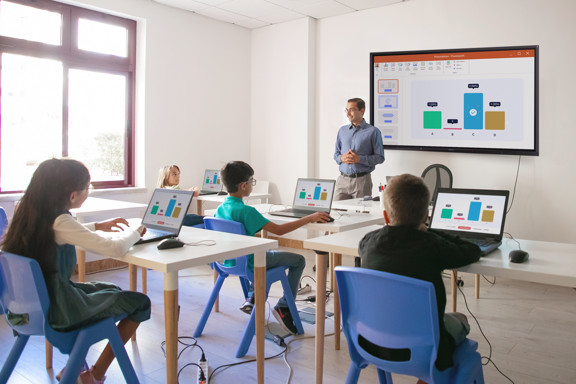
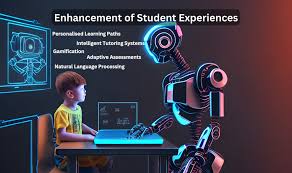
Traditionally, education has followed a one-size-fits-all model, where every student is expected to learn at the same pace. However, AI changes this approach by offering personalized learning experiences.
AI-powered platforms analyze a student’s learning style, strengths, and weaknesses. For example, adaptive learning software can adjust the difficulty level of assignments, recommend additional study material, and even provide real-time feedback. This means a slow learner gets more support, while advanced learners can move ahead without waiting for the class to catch up.
👉 This personalization is one of the key reasons why experts believe AI is transforming the future of education into a more student-centered model.
2. Intelligent Tutoring Systems: How AI is Transforming the Future of Education with Virtual Teachers
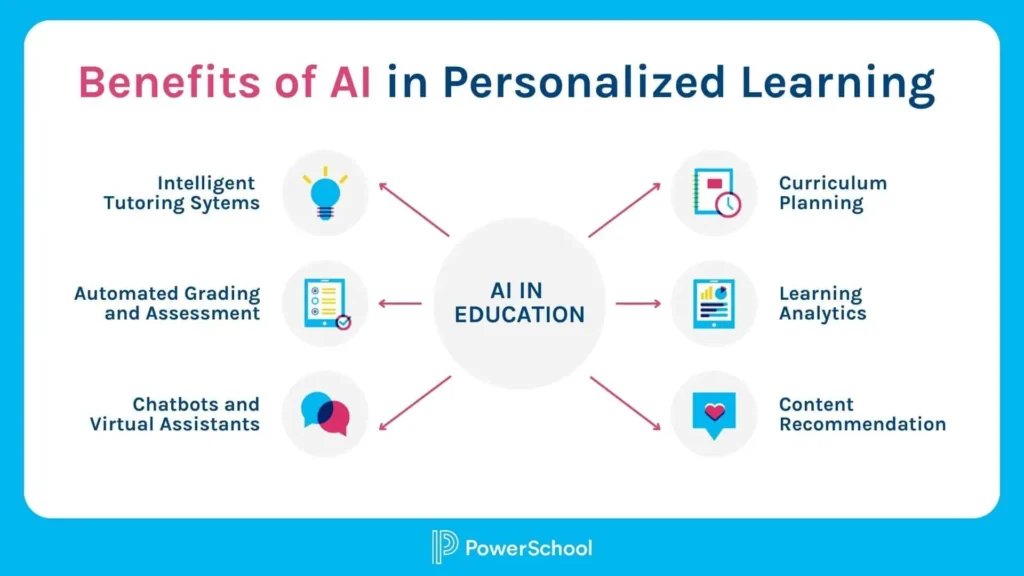
AI has given rise to intelligent tutoring systems (ITS) that function like virtual teachers. These systems are available 24/7 and can guide students step-by-step through complex concepts in subjects like math, science, or coding.
For example, platforms like Carnegie Learning and Squirrel AI use algorithms to simulate human-like teaching and mentoring. These AI tutors not only provide explanations but also assess student responses and adapt their teaching methods accordingly.
This is especially helpful in regions with limited access to qualified teachers, ensuring that every learner has a chance to succeed.
3. Automating Administrative Tasks: How AI is Transforming the Future of Education for Teachers
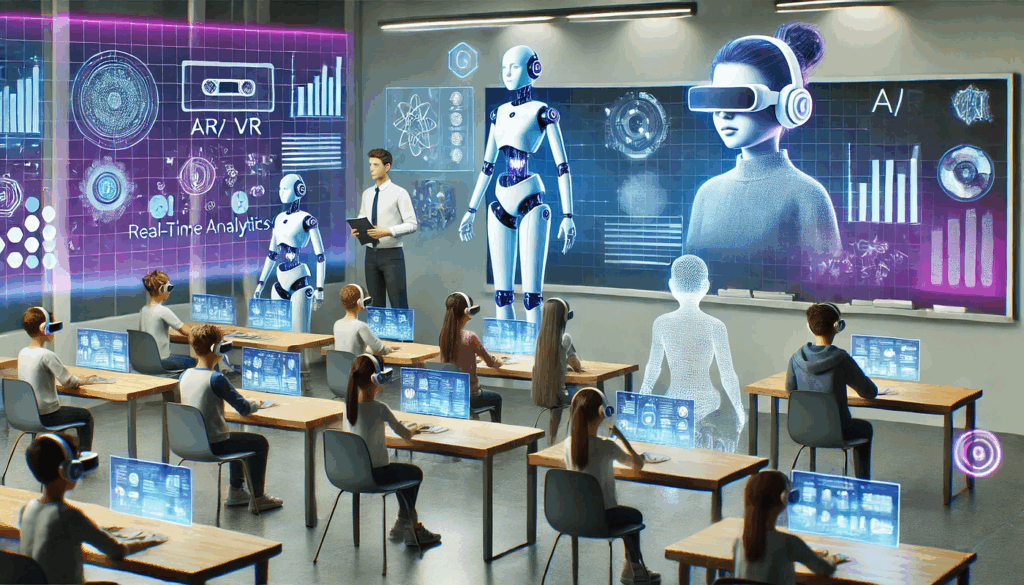
Teachers often spend countless hours on repetitive administrative tasks such as grading assignments, preparing timetables, and tracking student performance. AI tools can automate these processes, allowing educators to focus more on teaching and less on paperwork.
AI grading systems can evaluate multiple-choice tests, essays, and even project reports. Additionally, chatbots are being integrated into schools and universities to handle common student queries related to admissions, schedules, and fees.
By reducing the administrative burden, AI is transforming the future of education into a more efficient and teacher-friendly system.
4. Smart Classrooms and Virtual Learning: How AI is Transforming the Future of Education Globally
The rise of smart classrooms powered by AI has redefined the traditional learning environment. Virtual reality (VR) and augmented reality (AR) combined with AI provide immersive learning experiences.
For example, students can take a virtual field trip to ancient Rome, explore the human body in 3D, or simulate scientific experiments without stepping out of the classroom.
AI also enables virtual classrooms where students across the globe can connect with teachers through intelligent video conferencing platforms. These AI-powered tools ensure smooth translation, real-time captions, and interactive assessments during live sessions.
5. Predictive Analytics for Student Success: How AI is Transforming the Future of Education Through Student Success Insights
AI has introduced the power of predictive analytics in education. By analyzing past performance, attendance records, and engagement levels, AI can predict whether a student is at risk of falling behind.
Teachers and institutions can then intervene early with targeted support, tutoring sessions, or counseling. This data-driven approach improves overall academic performance and reduces dropout rates.
Such predictive systems are now being adopted by universities worldwide to enhance student retention and success.
6. Breaking Language Barriers: How AI is Transforming the Future of Education for Inclusivity
Language has always been a major barrier in global education. AI-powered translation tools and speech recognition systems are now helping students learn in their native languages while still accessing international study material.
For instance, AI can provide real-time translations during online lectures, making education inclusive and accessible to students across linguistic backgrounds.
This democratization of knowledge ensures that AI is transforming the future of education into a borderless and inclusive system.
7. Preparing Students for the Future Workforce: How AI is Transforming the Future of Education with Career Skills
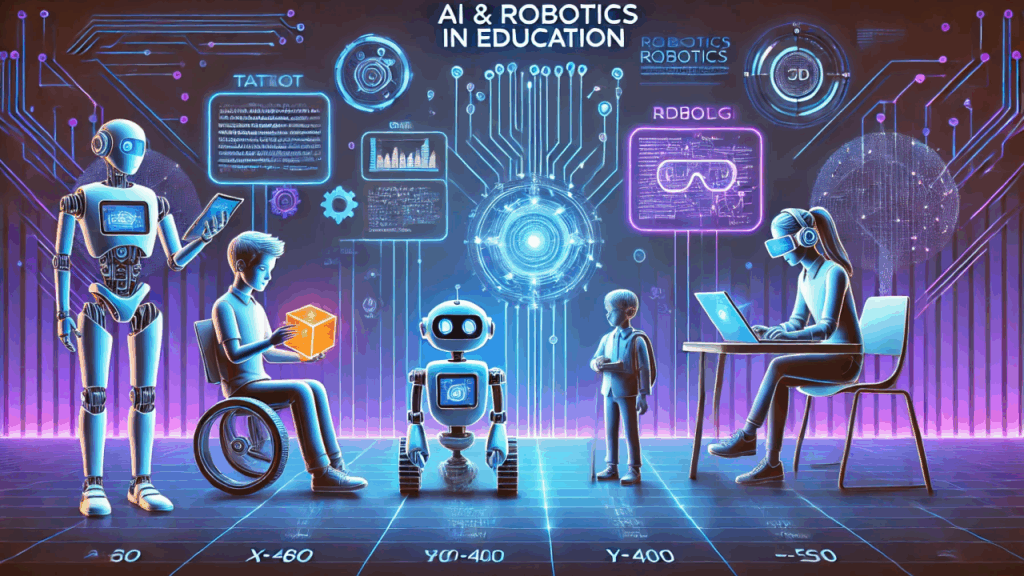
AI is not only shaping how students learn but also what they learn. The job market of the future will demand skills like data analysis, coding, machine learning, and digital literacy.
AI-driven career counseling platforms guide students in choosing the right courses, based on their skills, interests, and industry trends. By aligning education with future workforce demands, AI ensures that students are career-ready.
8. Challenges of AI in Education: How AI is Transforming the Future of Education Despite Barriers
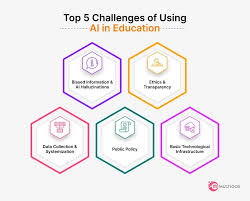
While AI has countless benefits, it also brings challenges that cannot be ignored:
- High Implementation Costs – Not all institutions can afford AI-powered tools.
- Data Privacy Concerns – Handling sensitive student data requires strong security systems.
- Risk of Reduced Human Interaction – Over-dependence on AI may reduce emotional and social connections between teachers and students.
Balancing human empathy with AI efficiency will be the key to sustainable adoption.
Conclusion
AI is no longer a futuristic concept—it is already reshaping the classrooms of today. From personalized learning and intelligent tutoring to predictive analytics and global accessibility, AI is transforming the future of education in ways that were once unimaginable.
While challenges exist, the benefits far outweigh the risks. As AI continues to evolve, students and educators will experience a smarter, more efficient, and inclusive education system.
👉 The future of education is not just digital—it’s intelligent. And AI is leading the way.